
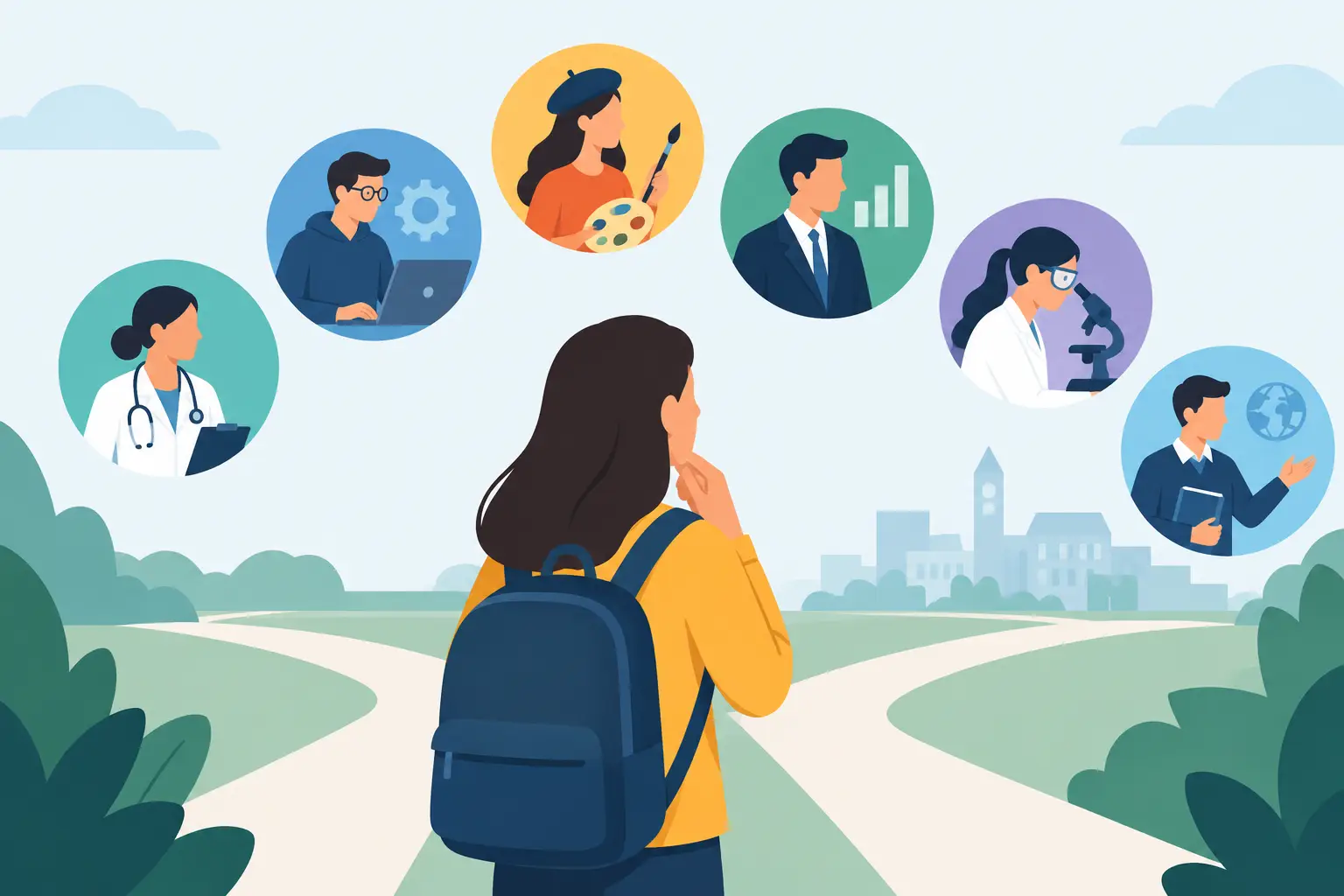
A student can be talented, hardworking, and deeply motivated yet still struggle to picture a future beyond the jobs they see every day. That is why career exploration opportunities for students matter. They turn possibility into something young people can see, ask about, practice, and pursue with the support of adults who believe in them.
For many students, career planning is not simply a matter of choosing a major or completing an application. It is about gaining access to information, relationships, and experiences that reveal what is possible. A conversation with a mentor, a visit to a workplace, a team project, or an introduction to a professional can change the direction of a young person’s goals.
Why Career Exposure Must Start Before Graduation
Too often, students are asked what they want to be before they have had a meaningful chance to learn how different careers work. They may know a few highly visible roles, but not the range of careers that keep hospitals, businesses, sports organizations, schools, media companies, and neighborhood institutions moving forward.
Early exposure does not require a student to commit to one path. Its purpose is the opposite: to give young people room to explore. A middle school student who enjoys sports may discover careers in coaching, physical therapy, event operations, communications, nutrition, or business. A student who likes solving problems may find purpose in engineering, entrepreneurship, skilled trades, public service, or technology.
The strongest programs help students connect what they are learning now to the choices they will make later. Math becomes relevant when it supports budgeting, data analysis, construction, or sports statistics. Communication becomes more than a classroom assignment when students see how it shapes leadership, customer service, advocacy, and media. Career exposure gives learning a real-world context.
Career Exploration Opportunities for Students Work Best Together
A single career day can spark interest. Sustained opportunity builds direction. Young people benefit most when mentoring, academic enrichment, athletics, and professional exposure are connected rather than offered as separate experiences.
Mentors help students make sense of what they see. After meeting an architect, entrepreneur, college athlete, or health professional, a student may still wonder: Could I do that? What steps would I take? What happens if I make a mistake along the way? A caring mentor can answer honestly, share lessons from experience, and help a young person build a practical next step.
Educational programs provide the foundation. Career exploration has greater impact when students are also strengthening reading, problem-solving, financial awareness, digital skills, and confidence in their ability to learn. Exposure without preparation can feel distant. Preparation without exposure can feel abstract. Together, they give students both the vision and the tools to move forward.
Athletics can play a meaningful role as well. Sports create structured spaces where young people practice discipline, communication, resilience, and teamwork. Those habits translate across career paths. A student who learns to accept coaching, prepare consistently, and contribute to a team is developing skills valued in classrooms, workplaces, and communities.
What Meaningful Career Experiences Look Like
Career exploration should be active, not limited to a brochure or a short presentation. Students need chances to ask questions, observe professionals at work, and reflect on what they learned. The right experience depends on a student’s age, interests, transportation, schedule, and level of readiness.
For younger students, exposure may begin with professionals visiting a classroom, youth program, or athletic setting. They can hear directly from people working in a range of fields and begin connecting their own interests to real opportunities. At this stage, curiosity is the goal. Students should leave believing that their futures have more than one possible shape.
As students grow, the experiences can become more hands-on. Job-shadow days, workplace tours, career panels, project-based learning, college visits, and skills workshops help students understand the daily realities of different roles. A student interested in health care, for example, may learn that the field includes direct patient care, administration, technology, research, mental health, and community outreach.
Older students benefit from opportunities that build professional confidence. Internships, paid work experiences, mock interviews, resume support, entrepreneurship projects, and networking conversations teach the unspoken rules of professional spaces. These experiences are especially valuable for students who may not have family networks connected to the careers they hope to pursue.
Access matters. An unpaid internship may be meaningful for one student but impossible for another who needs income or has caregiving responsibilities. A workplace visit is only useful if transportation and adult supervision are available. Strong community partners plan for these realities instead of assuming every young person starts from the same place.
The Adults Who Make Opportunity Real
Students do not need adults to choose a future for them. They need adults who listen, introduce, encourage, and follow through. Parents, educators, coaches, mentors, employers, and community leaders each bring a different kind of support.
Parents and caregivers can ask open questions that make room for discovery: What did you enjoy about that visit? What surprised you? What would you want to learn next? The goal is not to pressure a student into a prestigious answer. It is to help them notice their interests, strengths, and values.
Educators and school leaders can make career exploration part of regular learning rather than an occasional event. A writing assignment can become a professional email exercise. A science lesson can include a conversation about environmental careers. A student leadership role can become practice in public speaking, planning, and accountability.
Coaches and youth program leaders can reinforce that success is larger than the scoreboard. Athletics may open doors, but every young athlete should also see pathways in education, business, health, technology, community leadership, and the many careers that support the sports world. This perspective protects young people from feeling that one outcome defines their future.
Local businesses and corporate partners have a unique role because they can make work visible. They can host students, volunteer as speakers, provide project challenges, offer internships, and help students understand what employers look for beyond grades. Reliability, curiosity, communication, and the ability to work with others are skills young people can begin building now.
Building Programs That Lead Somewhere
The most effective career exposure programs do more than inspire a student for one afternoon. They create a pathway. That means tracking interests over time, helping students set goals, connecting them to mentors, and offering the next opportunity when they are ready.
Programs should also reflect the communities they serve. Students are more likely to imagine themselves in a role when they meet professionals with relatable stories, including people who overcame barriers, changed direction, or built a career through nontraditional routes. Representation is not a substitute for preparation, but it can make ambition feel more believable.
It also helps to measure outcomes that go beyond attendance. Did students identify new career interests? Did they gain a mentor or complete a workplace experience? Did they improve their ability to introduce themselves, ask for help, or set an academic goal? These signs show whether exposure is becoming momentum.
Combs Enterprises brings these elements together by connecting youth with mentoring, educational programming, athletics, and professional role models. This integrated approach recognizes a simple truth: young people thrive when opportunity is reinforced from more than one direction.
A Shared Responsibility With Lasting Impact
Career readiness is often discussed as an individual responsibility, but access to career knowledge is a community responsibility. Students should not have to depend on luck, family connections, or geography to learn what careers exist and how to prepare for them.
When schools, families, coaches, nonprofits, and businesses work together, they create a stronger network around each student. A young person gains more than career information. They gain trusted adults, practical skills, a sense of belonging, and the confidence to take the next step even when the path is unfamiliar.
The next meaningful opportunity may be as simple as inviting a student into a conversation, introducing them to a professional, or making space for them to see a workplace with new eyes. Those moments tell young people that their talent has a place, their goals are worth supporting, and their future is a shared investment.
Leave a Reply