
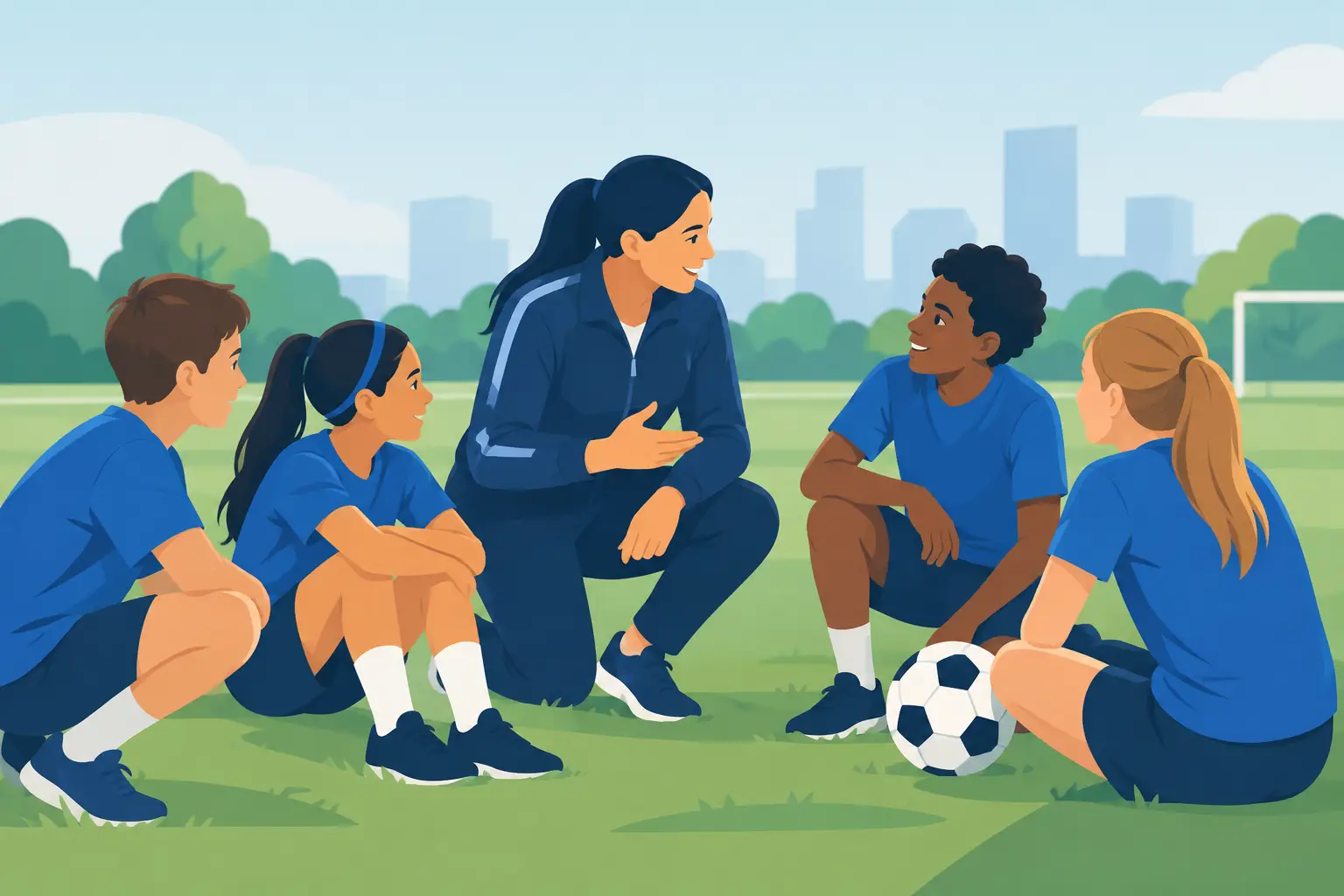
A young person may first show up for practice because they love the game. What keeps them growing, however, is often bigger than the scoreboard: a coach who asks about school, a mentor who listens, a teammate who expects their best, and a community that makes room for their future.
Sports based youth development programs bring those moments together with intention. At their best, they use athletics to build discipline, confidence, teamwork, and leadership while connecting young people to academic support, caring adults, and exposure to opportunities beyond the field or court. For families, schools, coaches, and community partners, that integrated approach can turn a few hours of play into a meaningful pathway forward.
Why sports can be a powerful starting point
Sports create a natural setting for young people to practice skills that matter far beyond competition. They learn to arrive prepared, communicate under pressure, respond to feedback, recover after disappointment, and contribute to a shared goal. These are not abstract lessons. They happen when a player encourages a teammate after a mistake, when a coach reinforces accountability, or when a team works through a hard loss without giving up on one another.
Athletics also give many students a place to belong. A consistent team environment can offer structure after school, supportive relationships with adults, and a peer group built around effort and mutual respect. That matters especially where young people have limited access to safe activities, enrichment, transportation, or professional networks.
Still, sports alone are not a complete youth-development strategy. Talent can open a door, but it should not be the only measure of a young person’s potential. A program centered only on winning may leave behind participants who need academic encouragement, emotional support, leadership practice, or a clearer picture of what is possible after graduation.
What effective sports based youth development programs include
The strongest programs treat young people as whole people. They do not ask students to choose between being athletes, learners, family members, and future professionals. Instead, they build connected experiences that support each part of a young person’s growth.
Mentoring that goes beyond motivation
A caring mentor can make the difference between a student feeling seen and feeling like another name on a roster. Effective mentoring is consistent, respectful, and grounded in real conversation. It may include goal setting, check-ins on attendance and schoolwork, guidance through conflict, or simply a reliable adult asking, “How are you doing?” and staying long enough to hear the answer.
The goal is not to direct every choice for a young person. It is to help them recognize their strengths, consider consequences, and build the confidence to make informed decisions. Coaches can be powerful mentors, but programs are stronger when young people also have access to educators, community leaders, alumni, and professionals who bring different perspectives.
Educational support connected to athletic goals
Students should never receive the message that athletic ability matters more than academic progress. Quality programs reinforce that school attendance, literacy, study habits, and graduation are part of preparation for every future path.
That can look like dedicated homework time before practice, tutoring partnerships, college and career readiness workshops, or recognition for academic improvement. The right approach depends on the age of participants and local needs. Younger students may benefit most from reading support and routines, while high school students may need help navigating applications, financial aid, résumés, and interviews.
Career exposure that makes opportunity visible
Many young people can name a famous athlete, but they may not know the range of careers that make sports, entertainment, business, health care, technology, and community organizations run. Career exposure expands the picture.
Meeting professionals, visiting workplaces, participating in job-shadowing experiences, and hearing honest career stories can help students connect their interests to concrete possibilities. A young athlete who enjoys strategy may discover sports management or entrepreneurship. Another who values wellness may become curious about physical therapy, nutrition, or mental health. The lesson is clear: their future is not limited to one role.
A culture of belonging and accountability
Every participant deserves a setting where they are respected, safe, and challenged. That includes clear expectations for behavior, fair access to instruction and resources, and a culture that rejects bullying, discrimination, and humiliation as coaching tools.
Accountability belongs in that culture, too. Young people need adults who hold high expectations while providing the support required to meet them. There is a meaningful difference between saying, “Do better,” and saying, “Here is what better looks like, and here is how we will help you get there.”
Designing programs around access, not assumptions
A program can have excellent coaches and still exclude the young people it hopes to serve. Registration fees, equipment costs, travel, practice schedules, transportation, and family work responsibilities can all become barriers. Access has to be designed into the program from the beginning.
Community-centered organizations listen before they build. Families, students, educators, and neighborhood partners can identify what will make participation realistic. In one community, the priority may be low-cost enrollment and uniforms. In another, it may be rides home after evening practice, bilingual family communication, meals, or a partnership with a school that can provide space.
There are trade-offs. Travel teams and highly competitive leagues may offer advanced competition and visibility, but they can also demand time and money that many families cannot spare. Recreational and school-based programs may be more accessible, though they may need added resources to deliver mentoring and career exposure. The best model depends on the community, but equity should remain a nonnegotiable goal.
How partners create lasting impact
No single coach, school, nonprofit, or donor can carry this work alone. Young people benefit when community institutions share responsibility and connect their strengths.
Schools can help align academic support and identify students who would benefit from enrichment. Coaches can create daily opportunities to practice leadership and teamwork. Nonprofit partners can provide mentoring expertise, family services, and trusted neighborhood relationships. Businesses can offer career speakers, workplace visits, internships, and resources. Donors and corporate social-responsibility teams can fund scholarships, equipment, transportation, and programming that keeps participation within reach.
This is the model behind the work of Combs Enterprises: bringing together athletics, education, mentorship, philanthropy, and professional exposure so young people can access more than one opportunity at a time. When these supports operate in connection rather than isolation, students are more likely to experience continuity from practice to classroom to career exploration.
Measure growth beyond the final score
Wins can be exciting, and competitive progress has value. But a youth-development program should ask broader questions. Are students attending school more consistently? Do they feel connected to supportive adults? Are they building confidence in communication and leadership? Are families returning because they see a positive difference? Do participants understand more about college, training, and career options than they did before?
Numbers such as enrollment, attendance, academic progress, graduation, and retention can help tell the story. So can student voices. A young person describing how they learned to speak up, ask for help, or imagine a career they had never considered is evidence of growth that deserves attention.
Programs should also be willing to learn from what is not working. If girls leave at higher rates, if transportation affects attendance, or if students are not engaging in academic sessions, leaders need to adjust. Responsiveness is not a weakness. It is how a community keeps its promise to the young people it serves.
Every young person deserves a full team
The most meaningful youth programs do not simply prepare students for the next game. They help prepare them for the decisions, relationships, classrooms, workplaces, and communities that will shape the rest of their lives.
Whether you are a parent, educator, coach, local business, or potential supporter, consider where your role fits on that team. Offer time, share professional experience, create a partnership, provide resources, or encourage a young person who is still learning to see their own potential. A stronger future begins when young people know their community is willing to show up for it.
Leave a Reply