
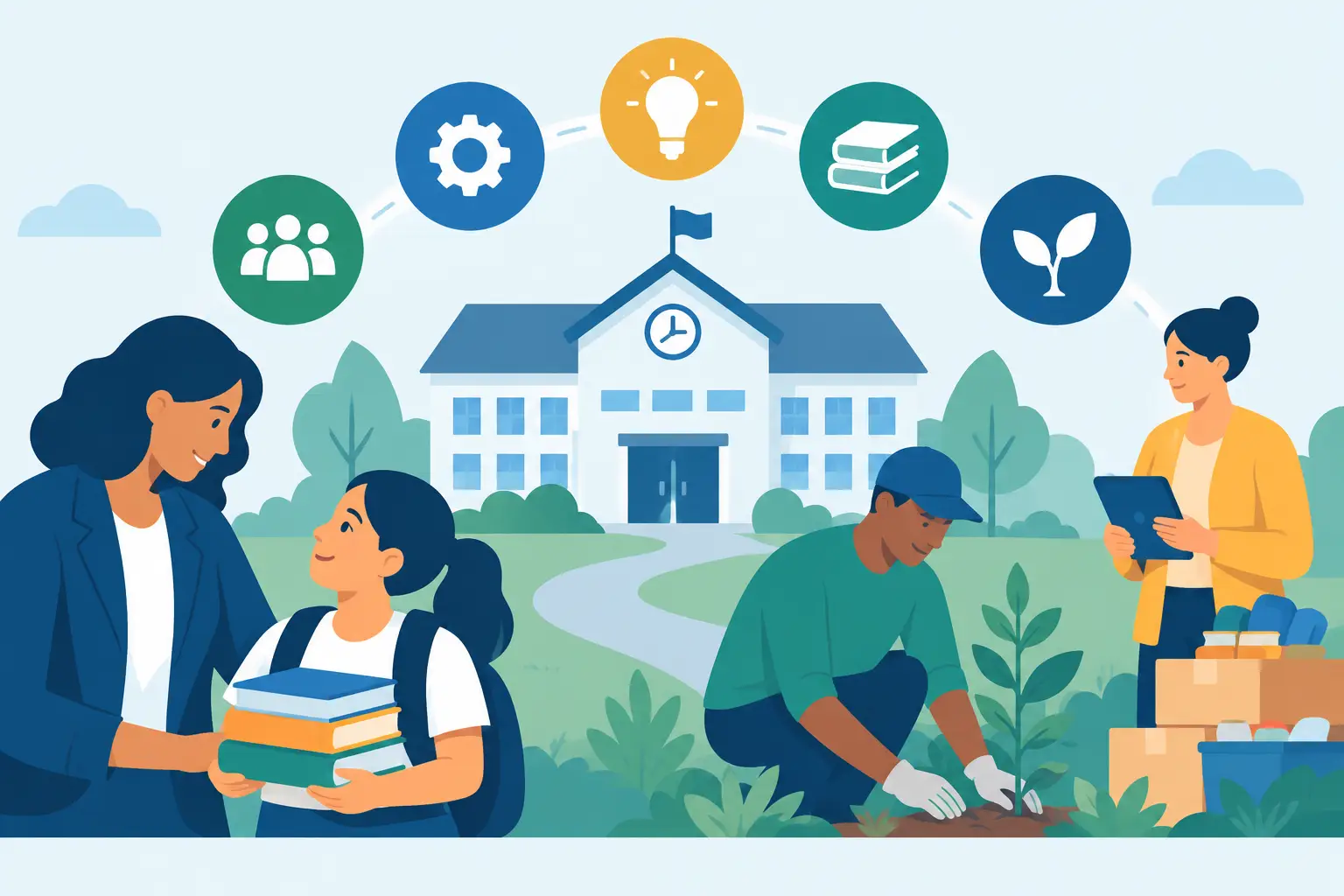
A school can have dedicated teachers, determined students, and a clear vision for success, yet still lack the resources to turn that vision into daily opportunity. How can donors support schools in ways that last? By investing not only in supplies and facilities, but also in the relationships, experiences, and pathways that help young people see what is possible.
For students, opportunity is rarely created by one program or one person. It grows when academic support, caring mentorship, safe athletic spaces, and career exposure work together. Donors can help schools build that connected support system, especially in communities where families and educators are already carrying a great deal.
Fund What Students Need to Learn and Belong
Direct financial support matters. Schools often need flexible resources for classroom materials, technology, books, tutoring, transportation, uniforms, healthy snacks, field trips, and fees that can quietly prevent a student from participating. A gift that seems modest at the organizational level may mean a student can join a team, attend a college visit, or complete a project with the right tools.
The strongest gifts begin with listening. Rather than assuming what a school needs, donors can ask school leaders, educators, students, and families where the gaps are most immediate. One school may need updated science equipment. Another may need reliable transportation so students can remain after school for tutoring or athletics. A third may need support for counselors, mentors, or enrichment programs.
Flexible funding is especially valuable because needs can change quickly. Restricted gifts can produce meaningful results when they serve a defined goal, such as renovating a gym or launching a reading initiative. At the same time, unrestricted support gives leaders room to respond when a student opportunity, family need, or unexpected barrier arises.
How Can Donors Support Schools Through People?
A student may remember the new laptop or renovated field, but the adult who showed up consistently can shape their confidence for years. Donors can support schools by making mentorship, coaching, and professional guidance part of the investment.
Individuals and organizations can volunteer their time, share career experiences, host workplace visits, or support structured mentoring programs. These opportunities help students connect classroom learning to a future they can picture. Meeting an engineer, entrepreneur, healthcare worker, artist, athlete, or skilled trades professional can turn a vague interest into a real goal.
Consistency matters more than a one-time appearance. A single career day can be energizing, but sustained relationships give young people a trusted source of encouragement and accountability. Schools and community partners should establish clear expectations, background checks, training, and staff coordination so volunteers contribute in ways that are safe, respectful, and useful.
For businesses, support can also include employee volunteer time and leadership participation. When professionals make room to mentor students, review resumes, conduct mock interviews, or speak about overcoming setbacks, they help young people build the confidence and practical skills that support long-term success.
Invest in Athletics as a Development Opportunity
Athletics can be far more than a game. In a well-supported program, students practice discipline, teamwork, communication, resilience, and leadership. They learn how to prepare, how to receive feedback, and how to contribute to something larger than themselves.
Donors can make these benefits accessible by funding equipment, facility access, transportation, coaching development, registration costs, meals, and academic support for student-athletes. This is particularly meaningful for students who might otherwise be excluded because of cost or limited access to safe spaces for recreation and training.
Still, athletics should not be treated as separate from education. The most effective investments connect sports with tutoring, mentoring, wellness, and career exposure. A student who is encouraged to bring the same focus to the classroom that they bring to practice gains a stronger foundation for graduation and future leadership.
Community-centered organizations, including Combs Enterprises, help bring these elements together by connecting youth athletics with educational programming, mentorship, and exposure to professional opportunities. This integrated approach recognizes that young people do not experience their goals in separate categories. They need support that reflects the full picture of their lives.
Create Career Exposure Before Students Need a Job
Many students are asked what they want to be before they have had a fair chance to see the range of careers available to them. Donors can help close that exposure gap by supporting internships, job-shadowing, college visits, career panels, entrepreneurship programs, and hands-on learning experiences.
Career exposure is especially powerful when it begins early and occurs often. Elementary and middle school students benefit from seeing the many roles adults hold in their communities. High school students can go further through workplace tours, paid internships, portfolio support, financial literacy, and direct introductions to professional networks.
A meaningful career program does more than hand students a brochure. It gives them a chance to ask questions, practice communication, understand workplace expectations, and meet people who can encourage their next step. For students with limited access to professional networks at home, these connections can be life-changing.
Donors should consider covering the practical costs that determine whether students can participate. Transportation, work clothing, meals, technology, and stipends can make the difference between an opportunity that is technically available and one that is genuinely accessible.
Strengthen the Adults and Partnerships Around Students
Schools do not have to carry this work alone. Donors can help build strong partnerships among educators, families, coaches, nonprofits, local businesses, and community leaders. Each group brings knowledge and resources, but collaboration turns separate efforts into a reliable network around young people.
A local business might provide internships while a nonprofit coordinates mentors. A school can identify students who would benefit most, while families offer insight into schedules, barriers, and goals. Donors can support the coordination required to make these partnerships effective, including program staff, communication tools, evaluation, and transportation.
Investing in educators and coaches is equally important. Professional development, classroom grants, wellness resources, and recognition programs signal that the adults serving students are valued. When teachers and coaches have support, they are better positioned to create stable, encouraging environments where students can grow.
Give With Equity, Trust, and Clear Outcomes
Effective school giving requires both ambition and humility. Donors should seek clear outcomes, such as improved attendance, stronger academic engagement, participation in enrichment, access to mentors, or successful transitions into college and careers. Measuring progress helps schools and supporters understand what is working and where more support is needed.
But numbers are not the whole story. A student who begins raising their hand in class, returns to school after a difficult period, or takes pride in leading a team is also making progress. Schools need room to recognize the personal growth that often comes before a measurable academic result.
Equity should guide every decision. Support is most meaningful when it reaches students facing the greatest barriers, without stigma or unnecessary hurdles. That may mean funding programs at schools with fewer resources, providing scholarships confidentially, or ensuring that programs are accessible to students with different learning needs, schedules, and transportation realities.
Trust matters, too. Donors can hold partners accountable while respecting the expertise of educators, students, and community leaders. Asking thoughtful questions, reviewing results, and maintaining open communication creates better partnerships than imposing a solution from outside.
Make Support a Shared Commitment
A donor does not need to be a major foundation to make a difference. Families can organize group giving. Local businesses can sponsor a team, classroom project, or career day. Alumni can return as mentors. Community members can contribute supplies, offer professional skills, or advocate for sustained investment in public education.
The goal is not simply to fill a short-term gap. It is to help young people experience the guidance, opportunity, and belonging that allow them to become confident learners and future leaders. When a community chooses to invest its time, resources, and relationships in students, schools become stronger places for every young person to build a future worth pursuing.
The next meaningful contribution may be a donation, an introduction, a volunteer hour, or a seat at the table for a student whose potential deserves to be seen.
Leave a Reply