
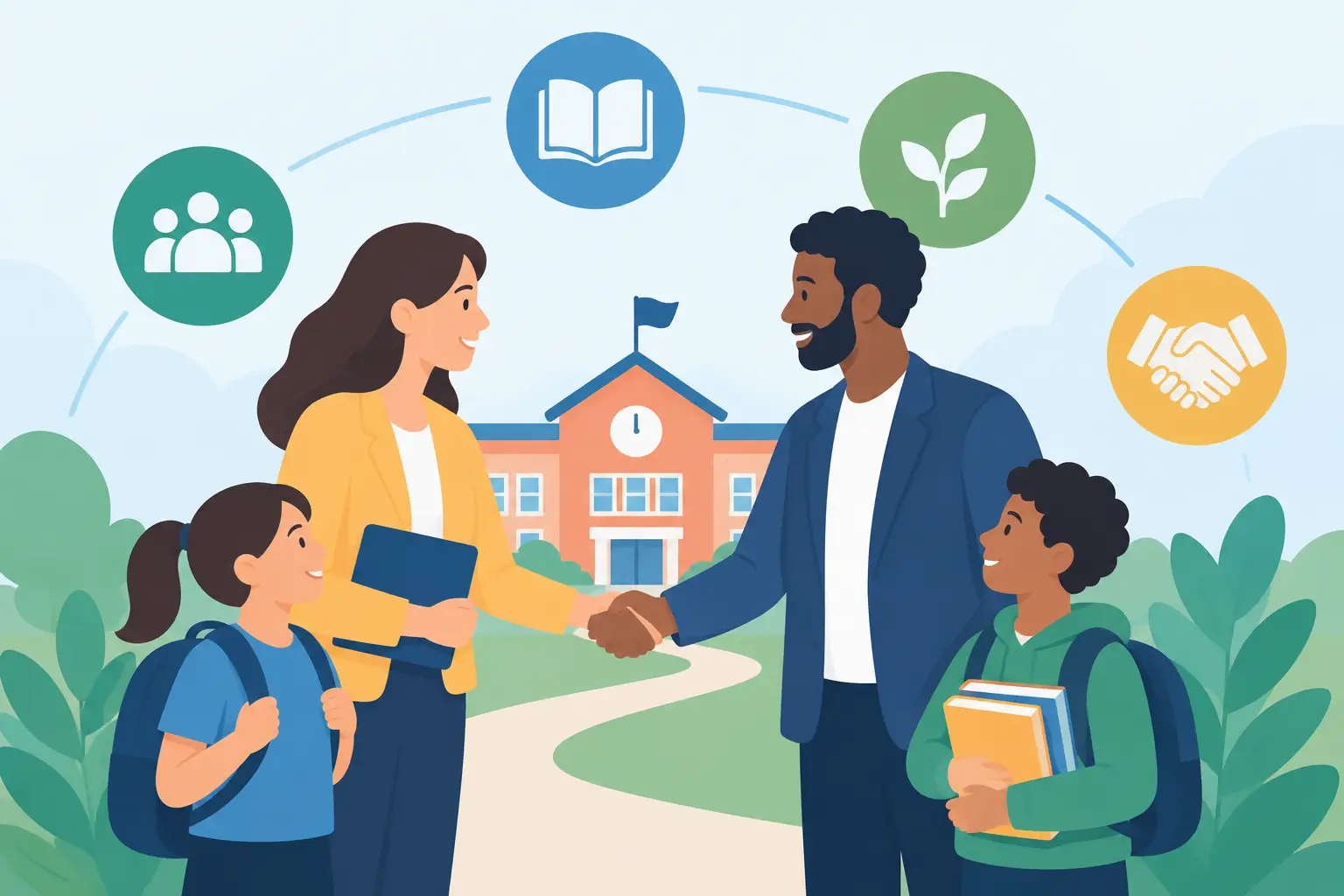
A student should not have to depend on luck to meet a mentor, join a team, explore a career, or find a safe place to grow after the final bell. The strongest nonprofit school partnership ideas create those opportunities on purpose, bringing schools, families, coaches, community leaders, and supporters around the same table.
For schools, the right partnership can extend what educators already make possible every day. For nonprofits, it offers a trusted setting to build relationships and reach young people consistently. The goal is not to add another disconnected program. It is to surround students with guidance, enrichment, and real pathways forward.
What Makes a School Partnership Meaningful
A meaningful partnership begins with a shared student outcome, not simply a calendar of events. A school may need stronger attendance, more career exposure, safe after-school options, or support for students navigating a difficult transition. A nonprofit may bring mentors, coaches, volunteers, program staff, or access to local employers.
The best work happens when each partner is clear about its role. School leaders understand student needs, schedules, family communication, and academic priorities. Nonprofits can contribute trusted adults, specialized programming, community relationships, and flexible support. Together, they can create experiences that help young people build confidence alongside academic skills.
Not every idea fits every campus. A rural district may prioritize transportation and virtual career access, while an urban school may need more safe spaces and neighborhood-based mentors. Start with what students and families say they need, then build a partnership that can show up reliably.
12 Nonprofit School Partnership Ideas for Youth Growth
1. Create a consistent mentoring circle
One-time motivational talks can spark interest, but consistent mentoring changes the experience of school. Pair students with trained, caring adults who meet regularly to discuss goals, challenges, leadership, and next steps. Small group circles often work well because students gain both individual encouragement and peer connection.
Mentors should not be expected to replace counselors, teachers, or families. Their role is to be another steady voice that listens, encourages accountability, and helps young people see their own potential.
2. Build an after-school athletics and leadership program
Athletics can be a powerful vehicle for discipline, teamwork, resilience, and confidence when it is connected to a larger purpose. A nonprofit can partner with schools to provide coaches, equipment, fitness activities, study time, and leadership workshops in one structured program.
The strongest model does not reserve opportunity only for elite athletes. It welcomes students who need a positive routine, a team community, or a healthy outlet. Include academic check-ins and clear expectations so participation supports success in the classroom as well as on the field or court.
3. Bring career exposure into the school day
Many students are asked what they want to become before they have met people working in a range of professions. Nonprofits can organize career panels, workplace visits, job-shadow days, and conversations with professionals from business, health care, technology, the trades, public service, sports, and the arts.
Make exposure practical. Students should leave knowing what a job involves, what education or training it requires, and what first step they can take now. Professionals do not need polished speeches. Honest stories about career turns, setbacks, and persistence are often what students remember.
4. Offer academic enrichment with real-world relevance
Tutoring is valuable, especially when it is connected to students’ interests and goals. A partnership might combine homework support with financial literacy, public speaking, digital skills, entrepreneurship, or project-based learning tied to local issues.
This approach helps students understand that academic growth is not separate from their future. Reading, math, communication, and problem-solving become tools they can use to lead, earn, create, and contribute.
5. Launch a student leadership council
Young people are experts in their own school experience. A student leadership council gives them a formal way to shape programming, identify barriers, and lead service projects. Nonprofit staff can facilitate leadership training while school staff help connect student recommendations to campus priorities.
Give the council real responsibility. Let students help plan an event, interview prospective mentors, recommend workshop topics, or present their ideas to community stakeholders. Leadership grows when young people see their voice produce action.
6. Support key transition years
The move into middle school, high school, college, training programs, or the workforce can be exciting and uncertain. Partnerships can provide transition workshops, campus tours, peer ambassadors, family information sessions, and summer bridge programs.
This is especially valuable for first-generation college-bound students and young people who may not have access to professional networks at home. Clear guidance at the right moment can prevent a temporary challenge from becoming a long-term setback.
7. Connect families to the partnership
Families are not an audience to be informed after decisions are made. They are essential partners in a student’s growth. Host welcoming family nights that combine program information with useful resources such as college planning, financial aid guidance, youth wellness conversations, and opportunities to meet mentors and coaches.
Scheduling matters. Evening, weekend, virtual, and multilingual options can make participation more accessible. A partnership earns trust by respecting families’ time and recognizing the strengths they already bring.
8. Develop service-learning projects
Service-learning gives students a chance to see themselves as contributors to their community now, not only in the future. A nonprofit and school can guide students in identifying a local need, researching it, planning a response, and reflecting on the impact.
Projects might address food access, neighborhood cleanup, support for older adults, youth wellness, or school pride. The lesson is not simply volunteering. It is learning that leadership includes noticing a need and organizing others to meet it.
9. Establish a student resource and opportunity hub
Students and families often miss opportunities because information is scattered across flyers, emails, and word of mouth. A shared hub can organize tutoring schedules, mentoring sign-ups, athletic programs, scholarships, internships, summer opportunities, and family resources in one trusted place.
The hub does not have to be complicated. It can begin with a designated school contact, regular office hours, and a consistent process for referring students to support. What matters is that young people know where to turn and that referrals lead somewhere.
10. Create paid youth internships and work experiences
Career exposure becomes more powerful when students can practice professional skills in a real setting. Nonprofits can work with local businesses, civic organizations, and donors to create paid internships, project-based roles, or youth ambassador positions.
Paid opportunities are particularly important because unpaid programs can exclude students who need to contribute to household income or cover their own expenses. Even short-term experiences can help young people build a resume, meet adults in their field of interest, and picture themselves in professional spaces.
11. Train coaches and program leaders as trusted adults
A coach, instructor, or activity leader may see a student in a different light than a classroom teacher does. With appropriate training, these adults can reinforce positive behavior, recognize when a young person needs support, and refer families to helpful resources.
Training should cover youth development, communication, boundaries, inclusion, and response protocols. It should also emphasize a simple truth: high expectations and genuine care belong together. Students rise when adults hold them accountable while making it clear they will not be abandoned after a mistake.
12. Build a community support team around measurable goals
Lasting partnerships need more than goodwill. Bring school leaders, nonprofit staff, families, students, funders, and community partners together around a small set of goals, such as improved attendance, program participation, course completion, graduation planning, or career readiness.
Measure progress without reducing students to numbers. Attendance and completion data matter, but so do student feedback, family trust, mentor consistency, and stories of growth. Review what is working each semester and be willing to adjust. A smaller program delivered consistently can create more value than a large initiative that disappears after one season.
Turning Partnership Into Shared Responsibility
A successful school partnership is built through listening before launching. Begin with a planning conversation that includes young people and families, identify one or two priorities, and agree on how communication, staffing, safety, and progress updates will work. This foundation prevents a well-intended program from becoming another burden on educators or another promise students cannot count on.
Combs Enterprises believes young people deserve connected opportunities that bring mentoring, educational enrichment, athletics, and career exposure into the same circle of support. That work requires schools to open doors, nonprofits to bring committed programming, and community members to invest time, resources, and relationships.
The next meaningful partnership can start with one question for students: What would help you feel more supported, prepared, and seen? Listen closely, invite the right people to respond, and keep showing up until opportunity feels less like an exception and more like a shared promise.
Leave a Reply