
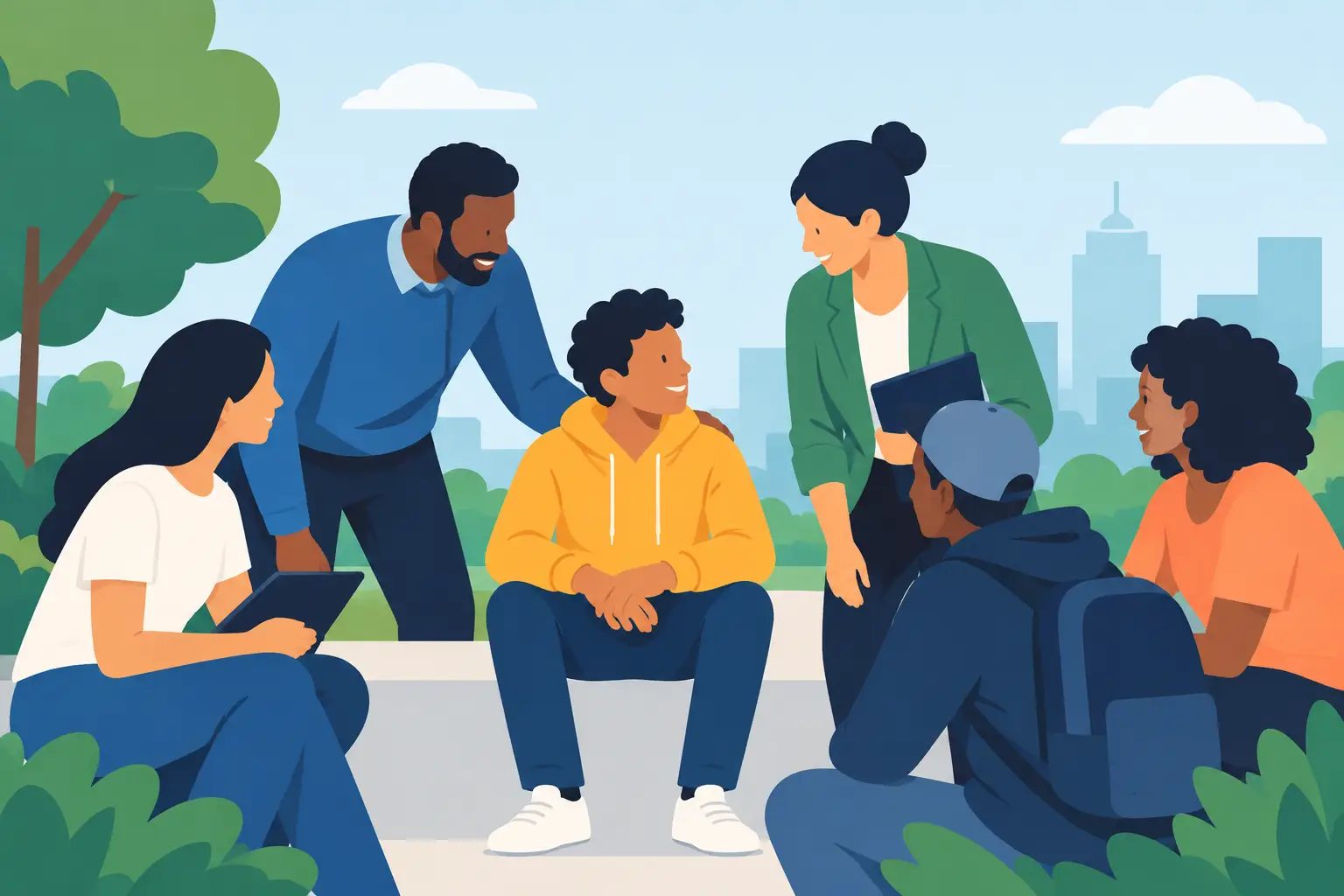
A student may leave school with a report card, leave practice with a new skill, and return home carrying questions about the future. Too often, those experiences remain separate. Community collaboration for youth development brings them together, surrounding young people with the guidance, enrichment, relationships, and exposure they need to see what is possible and pursue it with confidence.
No single adult, school, nonprofit, or business can meet every need a young person may have. Families remain central, but stronger outcomes are possible when the wider community shows up with shared purpose. A coach can reinforce discipline. A mentor can offer perspective. An educator can identify academic potential. A local employer can make a career feel real rather than distant. When those roles connect, young people receive more than a one-time opportunity. They gain a network that recognizes their potential and helps them build on it.
Why Community Collaboration for Youth Development Matters
Young people do not develop in silos. Their academic growth, physical health, confidence, relationships, and career aspirations influence one another. That is why isolated programs, even valuable ones, can fall short when students cannot access consistent support beyond a single setting.
A student who loves athletics, for example, may also need tutoring to remain eligible, a trusted mentor to work through setbacks, and exposure to careers beyond the field or court. Another student may excel in class but need a safe team environment to practice leadership, resilience, and communication. Community collaboration creates room for the whole young person, not just one measure of achievement.
It also helps close opportunity gaps. Many students have talent and ambition but limited access to professional networks, enriching activities, transportation, equipment, or adults who can help them navigate next steps. Partnerships can coordinate resources so support reaches students before a barrier becomes a reason to disengage.
This work is not about lowering expectations. It is about giving young people the relationships and practical tools to meet high expectations. When a community invests in guidance, learning, athletics, and career exposure together, it tells students: your future is worth planning for now.
Build a Circle of Support, Not a Single Program
The strongest youth initiatives begin with a clear understanding of what young people need and who is already positioned to help. Schools, families, coaches, faith communities, neighborhood organizations, local businesses, and philanthropic partners each bring different strengths. Effective collaboration respects those strengths while creating a shared path forward.
Start by listening to young people and families
Adults may see a need for tutoring, recreation, mentoring, or job readiness. Young people may describe the challenge differently: they want a place to belong, someone who follows through, help getting to an activity, or a chance to meet people doing work that interests them. Families may identify scheduling, cost, language access, or transportation as the obstacles standing between a child and a program.
Listening sessions, youth advisory groups, family conversations, and feedback after activities can shape programs that people can actually use. This step takes time, but it prevents organizations from building around assumptions. Participation grows when young people can recognize their own goals in the opportunity being offered.
Connect education, athletics, and mentorship
Athletics can be a powerful entry point because it gives young people routine, belonging, and a chance to practice discipline under pressure. But sports alone should not carry the full responsibility for development. Pairing athletic experiences with academic enrichment and mentoring turns participation into a broader pathway.
A coach who checks in on school progress, a mentor who attends a game, or an academic program that celebrates effort in practice sends a meaningful message: every part of a student’s growth matters. These connections can also help adults notice changes early, whether a young person needs encouragement, additional academic support, or a safe conversation.
The approach should fit the community. In some neighborhoods, a school-based partnership may make participation easiest. In others, a community center, recreation program, or nonprofit may be the trusted anchor. The goal is not to force one model everywhere. The goal is to make support consistent, visible, and accessible.
Make career exposure personal and practical
Career exposure is most effective when it moves beyond a poster or a single presentation. Young people benefit from meeting professionals, hearing honest stories about their paths, asking questions, and seeing how interests can become opportunities.
Local businesses, colleges, skilled trades, public-service organizations, and creative industries can all contribute. A student interested in technology may benefit from meeting an IT professional. A young athlete may discover careers in sports medicine, coaching, media, event management, or business. A student with a gift for helping others may see new possibilities through conversations with educators, health professionals, or community leaders.
These experiences do not need to promise a job to make a difference. Their value is often in expanding a young person’s sense of what they can pursue. A professional role model can help turn an unfamiliar future into a concrete next step.
What Strong Partnerships Look Like in Practice
Collaboration works best when partners are clear about responsibilities. A school may identify students and provide space. A nonprofit may coordinate mentors and activities. Coaches may create a structured environment where young people practice teamwork. Businesses may provide volunteers, career speakers, funding, or group opportunities. Donors can help cover the costs that keep students from participating fully.
Clear communication matters as much as good intentions. Partners should agree on who is serving students, how referrals work, what success looks like, and how families will stay informed. This does not require complicated systems at the start. It requires consistency, respect, and a commitment to follow through.
Trust is especially important. Communities have seen programs arrive with enthusiasm and leave when funding or attention shifts. Sustainable collaboration grows when organizations invest in long-term relationships, compensate people fairly for their expertise, and remain accountable to the young people and families they serve.
At Combs Enterprises, this integrated approach connects mentoring, educational programming, youth athletics, and career exposure so young people can build skills and relationships across every part of their development. The work recognizes that opportunity becomes more meaningful when it is supported by people who care and systems designed to help students keep moving forward.
Ways Community Members Can Participate
Community collaboration is not limited to large institutions. Parents, neighbors, alumni, small businesses, and local leaders all have a role. A caring adult can mentor. A business can host students, provide resources, or encourage employees to volunteer. A coach can reinforce academic goals. A donor can make uniforms, transportation, meals, learning materials, and career experiences more accessible.
The most helpful support is often reliable support. Young people remember the adult who returns their call, the organization that keeps its promise, and the team that celebrates progress even when the path is difficult. Consistency builds trust, and trust gives young people room to take healthy risks, ask for help, and lead.
When deciding where to contribute, look for efforts that treat young people as partners in their own growth. Ask whether programs connect learning with real-world exposure, whether families are included, and whether participants can stay engaged over time. A single event can inspire, but sustained relationships are what help inspiration become direction.
Every young person deserves more than a brief moment of encouragement. They deserve a community that notices their strengths, makes room for their ambitions, and stands beside them as they grow into leaders. Join the work in a way that fits your capacity, then keep showing up. That is how opportunity becomes a lasting part of a young person’s life.
Leave a Reply