
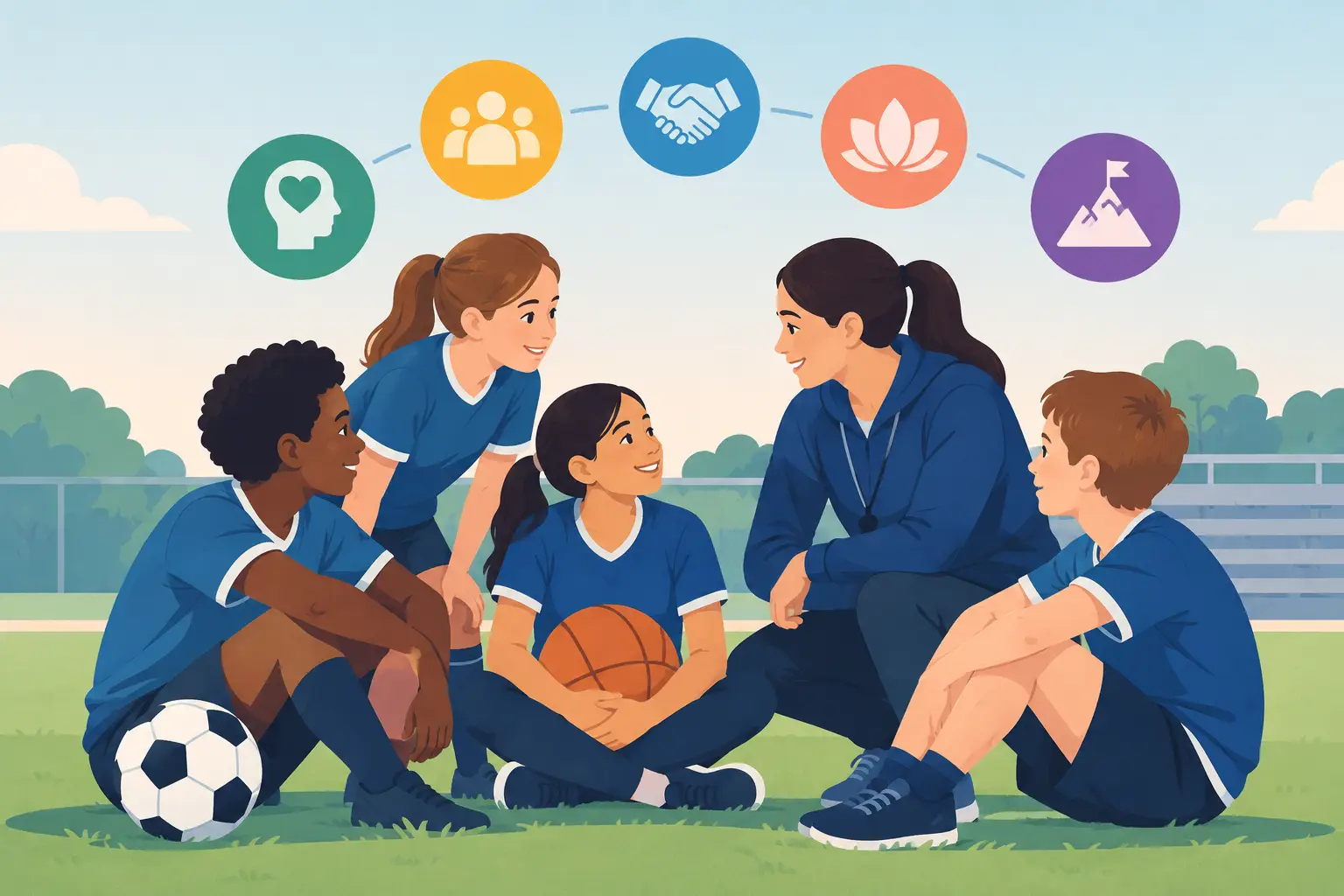
A missed free throw can become a moment of frustration, blame, or growth. A close game can test whether a young person listens, encourages a teammate, and recovers after a mistake. Those everyday moments are why social emotional learning through sports matters. When athletics are paired with caring adults, clear expectations, and opportunities to reflect, the field and court become places where young people practice skills that shape school, relationships, and future leadership.
Sports alone do not automatically build character. Competition can also magnify pressure, exclusion, and unhealthy ideas about winning if adults do not set the right culture. The opportunity is in the structure around the game: mentors who model respect, coaches who teach accountability, families who reinforce effort, and community partners who connect athletic participation to learning and career exposure.
What Social Emotional Learning Through Sports Builds
Social emotional learning helps young people understand themselves, manage emotions, build healthy relationships, make responsible choices, and work toward shared goals. In sports, these abilities are not abstract lessons. They show up in real time.
A student who is disappointed about limited playing time can practice naming that emotion and responding with maturity. A teammate can learn how to give feedback without tearing someone down. A captain can learn that leadership means making room for quieter voices, not simply being the loudest person in the huddle. These are practical skills, and they carry well beyond athletics.
Young people also gain confidence through repetition. They learn that improvement often comes after missed shots, difficult practices, and honest coaching. That lesson is especially valuable for students navigating academic challenges or uncertain access to opportunity. A supportive sports environment can help them see effort as a pathway to growth rather than a reason to fear failure.
The Skills Behind Strong Teams and Stronger Communities
The most meaningful athletic programs teach more than drills and game plans. They create consistent opportunities for young people to develop self-awareness, self-management, social awareness, relationship skills, and responsible decision-making.
Self-awareness gives young people language for pressure
Athletes feel pressure before a game, after a mistake, and when expectations are high. Rather than telling students to simply “toughen up,” coaches and mentors can help them identify what they are feeling. Is it nervousness, disappointment, anger, or fear of letting others down?
Giving emotions a name helps young people choose a response. A short pre-practice check-in, a conversation after a hard game, or a mentor asking, “What did you notice about yourself today?” can build this habit. Self-awareness does not remove pressure. It gives students a way to meet it with greater control.
Self-management turns setbacks into learning
Athletics offer frequent chances to practice self-management. Players must reset after an error, stay focused during a long practice, and respond to a referee’s call they do not like. These moments teach emotional regulation when adults guide them with consistency.
That guidance should not excuse harmful behavior or ignore high standards. A player can be held accountable for disrespect while also being supported in learning how to pause, communicate, and make a better choice next time. Discipline works best when it is connected to development, not humiliation.
Empathy strengthens teamwork
No team succeeds when every player is focused only on individual recognition. Sports can teach young people to recognize what others may be carrying: a teammate returning from injury, a student balancing family responsibilities, or a new player who is still finding confidence.
Empathy grows when teams make it a practice. Coaches can ask players to acknowledge one another’s effort, rotate leadership responsibilities, and talk openly about what respect looks like. These routines help students understand that belonging is something a team builds together.
Responsible decisions protect the whole group
Whether an athlete chooses to attend practice, prepares for school, speaks up when something feels unsafe, or refuses to join in bullying, their choices affect more than themselves. Sports make that connection visible. Teammates rely on one another, and young people see how preparation, honesty, and respect build trust.
This is also where adult role models matter. Students need to see leaders handle conflict calmly, honor commitments, and put people before ego. The example is often as powerful as the instruction.
Why Mentors and Coaches Matter So Much
A coach may be one of the most consistent adults in a young person’s week. That relationship can be transformative when it is built on high expectations and genuine care. Young people benefit from adults who notice their potential, challenge them to follow through, and make time for conversations that reach beyond the scoreboard.
Mentorship gives students another layer of support. A mentor can help a young athlete connect the discipline of practice to academic habits, career goals, and personal decisions. They can introduce students to professionals whose paths expand what young people believe is possible for themselves.
This integrated approach matters because young people do not experience life in separate categories. A challenge at home can affect classroom focus. Academic stress can affect confidence on the court. A caring network of coaches, educators, mentors, and families can respond to the whole student, not just the athlete.
Build the Right Conditions, Not Just a Winning Record
Programs seeking to support social emotional learning through sports should be intentional about culture. A winning record may be a source of pride, but it is not the only measure of success. The better questions are: Do young people feel safe? Do they know how to ask for help? Are they growing as teammates, students, and leaders? Do they have access to adults and opportunities that can shape their future?
Clear routines make these outcomes more likely. Teams can begin practice with a brief goal-setting conversation and end with reflection. Coaches can set standards for how players communicate after mistakes. Schools and community organizations can coordinate academic support around athletic schedules instead of treating it as an afterthought.
There are trade-offs to consider. Highly competitive environments can motivate some students, while others may disengage if performance becomes the only source of belonging. Not every young person wants varsity-level pressure, and not every sport program has the same resources. The goal is not to lower standards. It is to create multiple ways for students to contribute, grow, and be recognized.
Access also matters. Equipment costs, transportation, fees, and limited facilities can keep young people from participating. Community investment helps close those gaps, especially when organizations work with schools, local businesses, nonprofit partners, and families to make programs welcoming and affordable.
Connect Athletics to Opportunity Beyond the Game
Sports create a natural setting for career exposure because they introduce young people to more than athletes and coaches. Events rely on professionals in health care, media, technology, business, education, nutrition, event management, and community leadership. When students meet people working in these fields, athletics becomes a starting point for broader ambition.
A visit from a sports medicine professional can spark interest in health careers. A conversation with an entrepreneur can show students how leadership and teamwork apply in business. Academic enrichment can help young athletes connect the persistence they bring to practice with the habits needed in the classroom.
Combs Enterprises supports this kind of connected development by bringing together athletics, mentoring, education, and professional opportunity. The aim is not simply to create better players. It is to help young people become prepared, confident leaders with relationships and experiences that can carry them forward.
A Shared Responsibility to Help Young People Grow
Families, educators, coaches, donors, and community partners each have a role in creating developmental sports experiences. Parents can reinforce respect and effort at home. Schools can coordinate academic resources. Coaches can make reflection part of training. Businesses and supporters can provide funding, volunteer time, career exposure, and safe spaces for young people to learn.
The strongest message a community can send is simple: your growth matters, even when no one is keeping score. When young people are surrounded by adults who invest in their character, learning, and future, they gain more than a season of competition. They gain a team behind them for the road ahead.
Leave a Reply