
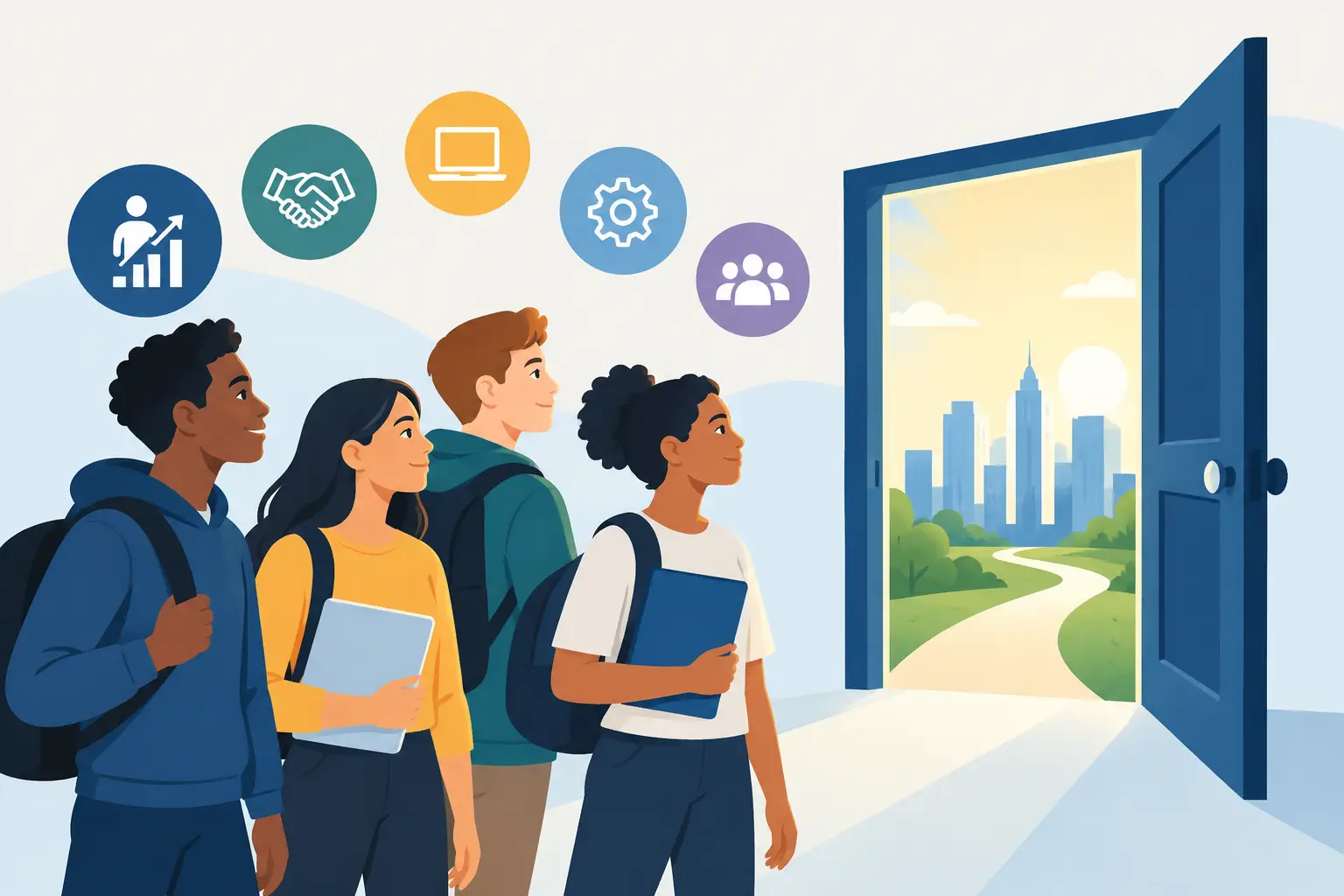
A young person can earn good grades, show up for practice, and still have no clear picture of what comes after graduation. They may not know someone who works in a field they could pursue, understand how to introduce themselves in a professional setting, or believe that opportunity is meant for them. Youth career readiness programs help close that gap by connecting preparation with possibility.
For families, schools, coaches, employers, and community partners, career readiness is not a single workshop or a resume template. It is a sustained commitment to helping young people recognize their strengths, build practical skills, meet caring adults, and see real pathways forward. When mentorship, education, athletics, and career exposure work together, young people gain more than information about jobs. They gain confidence, direction, and a community that believes in their potential.
Why Career Readiness Must Start With Access
Many students are asked what they want to be before they have had the chance to see what is possible. Traditional schooling can provide essential academic foundations, but it cannot always offer every student direct exposure to careers, professional networks, workplace expectations, or role models whose experiences reflect their own.
That difference in access matters. A student with a relative in health care may hear naturally about college requirements, internships, and different roles in a hospital. Another student may have the same interest and ability but lack those conversations. The issue is not motivation. It is opportunity, information, and connection.
Strong youth programs make those connections intentional. They introduce students to professionals, bring career conversations into familiar spaces, and create low-pressure opportunities to ask questions. A young person who meets an engineer, entrepreneur, educator, sports professional, or nonprofit leader can begin to replace uncertainty with a tangible next step.
Career readiness also begins before a student chooses a specific profession. Middle school students may benefit most from exploring interests and building self-awareness. High school students may need help identifying training options, preparing for interviews, and finding internships or summer experiences. Young adults may be ready for direct introductions to employers, credential programs, or mentors in their chosen field. The right approach depends on where each young person is starting.
What Effective Youth Career Readiness Programs Include
The best youth career readiness programs do not treat career exposure as a one-time event. A single career day can spark interest, but lasting growth comes from repeated experiences that connect personal development with practical preparation.
Caring Mentors Who Make Opportunity Feel Real
Mentors help young people turn broad encouragement into clear action. They can ask about goals, listen without judgment, share their own lessons, and help students navigate challenges that may not appear on a school schedule. A consistent mentor can also reinforce an essential message: asking for help is a strength, not a weakness.
The most meaningful mentorship is built on trust and consistency. It should never promise that every young person will follow the same path. Some students may pursue college, while others may thrive through technical training, entrepreneurship, military service, apprenticeships, or immediate employment. The goal is informed choice, supported by adults who respect a young person’s aspirations.
Academic Enrichment With a Clear Purpose
Academic growth remains central to career opportunity. Reading, math, communication, and problem-solving skills shape a student’s ability to pursue higher education, complete training, and adapt to changing workplaces. Yet academic support is often more motivating when students understand how it connects to their goals.
A student interested in design may see new value in math and technology. A future coach may recognize how communication and leadership affect a team. A young entrepreneur may begin to connect writing skills with pitching an idea or serving customers. Career readiness gives learning a visible purpose without reducing education to a paycheck.
Athletics as a Place to Practice Leadership
Athletics can be a powerful setting for career development when it is paired with guidance and reflection. On the field, court, or track, young people practice habits that employers and communities value: showing up prepared, working with others, responding to feedback, managing setbacks, and leading with discipline.
Sports alone do not guarantee career access. Not every young person participates in athletics, and not every athletic program creates space for professional development. But when coaches, mentors, and program leaders connect athletic experiences to life skills, sports become one part of a larger foundation for growth.
Real Career Exposure, Not Just Career Talk
Young people deserve to see how work happens. Site visits, job-shadowing opportunities, conversations with professionals, hands-on projects, and workplace simulations can make careers feel understandable and attainable. These experiences also help students discover what does not fit, which is just as valuable as finding a strong match early.
Career exposure works best when it includes a range of roles and routes. A hospital, for example, includes clinicians, technicians, administrators, information technology teams, facilities staff, and many other professionals. Showing students only the most visible job can unintentionally narrow their view of opportunity.
Effective programs often help participants build four connected skills:
- communicating clearly in person and in writing
- working responsibly with a team and meeting commitments
- setting goals and responding constructively to setbacks
- understanding professional expectations, from punctuality to follow-through
These skills matter across industries. They also support young people in school, in their families, and in their communities.
The Role of Community Partners
No single organization can meet every need a young person may have. Schools bring academic expertise. Families provide insight, encouragement, and accountability. Coaches create structured environments for teamwork and discipline. Nonprofits can offer trusted mentoring and enrichment. Businesses can provide professional insight, resources, and access to workplaces.
The strongest partnerships are not built around a photo opportunity or a one-day volunteer event. They are built around listening to young people and identifying where support is most needed. A local employer might host small groups for career exploration, provide employee mentors, or help students practice interviews. A school may identify students who would benefit from additional support. A community organization can maintain relationships that make participation feel welcoming and consistent.
For corporate social-responsibility teams, meaningful involvement often requires more than funding. Financial support is essential, but employees can also share their expertise, open doors to career experiences, and model the many ways people build a meaningful career. Businesses should be prepared to meet young people where they are, explain workplace language clearly, and value curiosity over polish.
Combs Enterprises recognizes that opportunity grows when community institutions work together. By bringing mentoring, educational programming, youth athletics, and career exposure into one connected model, the organization helps create environments where young people can develop both the skills and relationships needed to move forward.
How to Measure Progress Without Reducing Young People to Numbers
Program outcomes matter. Partners and supporters should understand whether young people are participating consistently, completing academic goals, developing professional skills, and gaining access to career experiences. Attendance, graduation progress, internship participation, mentor engagement, and postsecondary enrollment can all offer useful indicators.
But numbers alone cannot tell the full story. A student who speaks up for the first time in a group session, learns to recover after a difficult interview, or begins to imagine themselves in a professional role has made meaningful progress. Programs should make room for youth voice, mentor observations, and family feedback alongside formal data.
Success also looks different for different students. One young person may leave a program with a clear college plan. Another may gain the confidence to apply for a first job, reconnect with school, or pursue a certification program. Honest measurement recognizes those differences while holding programs accountable for expanding access and supporting growth.
A Shared Responsibility to Build Pathways
Career readiness should not depend on whether a young person happens to know the right person, attend the right school, or live near the right employer. Communities can change that reality by creating more consistent bridges between young people and the adults, experiences, and resources that help them thrive.
Parents can encourage exploration. Educators can connect classroom learning to real possibilities. Coaches can reinforce discipline and leadership. Employers can make their workplaces and wisdom more accessible. Donors and community supporters can invest in programs that stay present long enough to earn trust.
Every young person deserves more than a question about what they want to become. They deserve opportunities to try, learn, connect, and grow into the answer. Join the mission by helping create the guidance and career exposure that can turn potential into a path forward.
Leave a Reply