
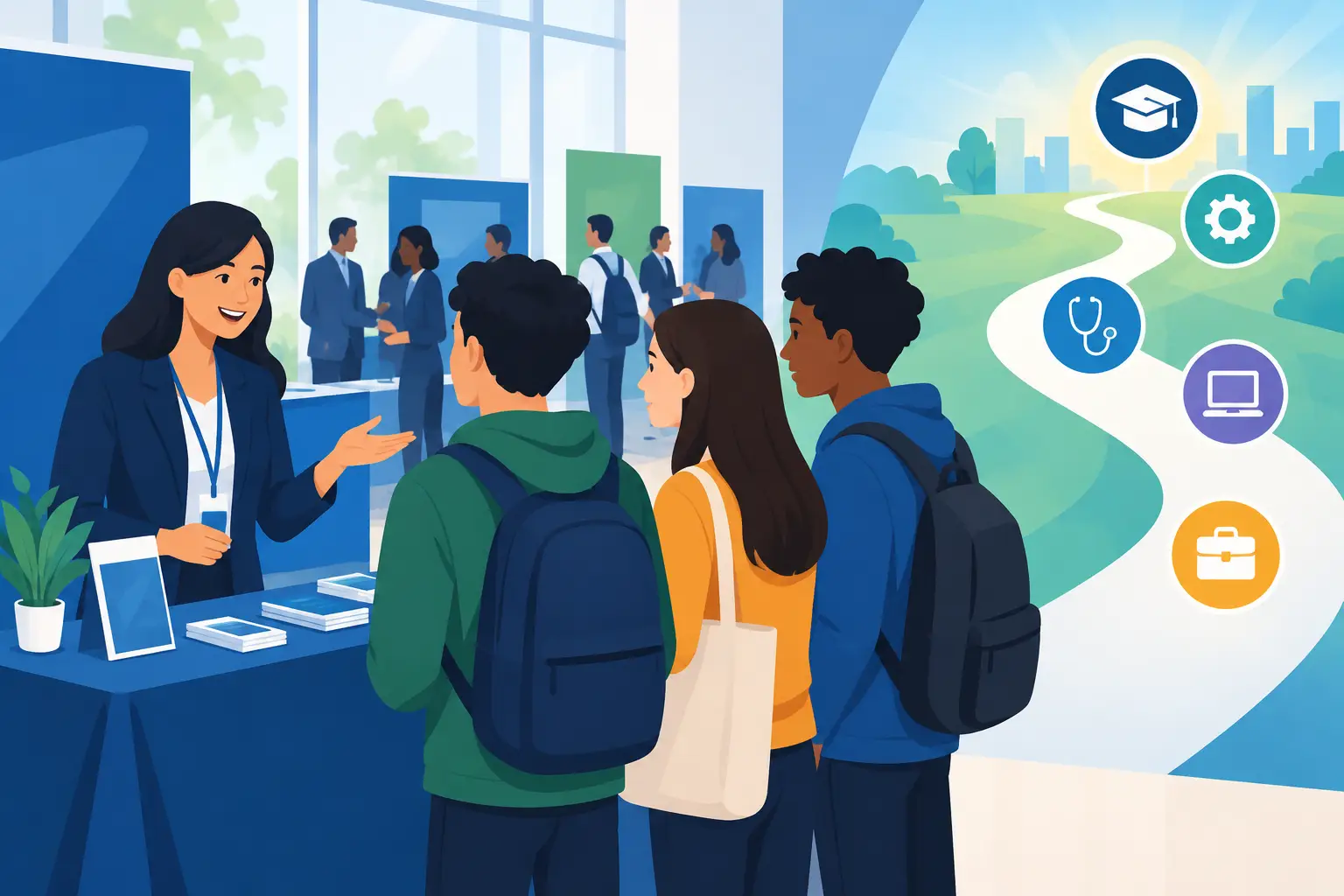
A student may know what a doctor, teacher, athlete, or entrepreneur does. What they may not know is how someone gets there, who can help, what setbacks look like, or whether that path is truly open to them. School career events can answer those questions by bringing professional possibility into a room where young people feel seen, welcomed, and encouraged to ask honest questions.
For many students, career exposure is not an extra activity. It is a bridge between classroom learning and a future they can picture for themselves. When schools, families, mentors, employers, and community organizations work together, an event can become more than a day of presentations. It can be the beginning of a relationship, a new goal, or the confidence to take the next step.
Why School Career Events Matter
Students make decisions about their futures long before they submit a college application or apply for their first job. They begin forming beliefs about what they are good at, who belongs in certain professions, and whether their ambitions are realistic. Those beliefs are shaped by what they see around them.
A meaningful career event expands that view. Meeting a construction manager, nurse, software developer, financial professional, small-business owner, public servant, or sports industry leader gives students a more complete picture of the working world. Hearing how a professional chose a path, learned a skill, or recovered from a mistake can be especially powerful for young people who have not had access to those conversations at home or in their neighborhood.
Career exposure also gives academic learning a clearer purpose. A student who meets an architect may see geometry differently. A conversation with a marketing professional can make writing, research, and presentation skills feel relevant. An athlete who hears from a physical therapist or sports executive may recognize that the sports world creates opportunities far beyond the field or court.
The goal is not to tell every student what they should become. It is to make the range of choices more visible and help them connect their interests, strengths, and effort to real pathways.
What Makes a Career Event Worth Students’ Time
A packed auditorium and a row of business cards do not automatically create impact. Students benefit most when an event is designed around participation, preparation, and follow-through.
Put relationships ahead of presentations
A keynote speaker can inspire a room, but small-group conversations often stay with students longer. Young people need space to ask questions that feel personal: What did you study? Did you ever doubt yourself? What does your day actually look like? How do I start if I do not know anyone in this field?
Invite professionals who are willing to be candid, not only impressive. A polished job title matters less than a guest’s ability to listen, share practical advice, and treat students as future colleagues. Representation matters here as well. Students should encounter professionals with different backgrounds, identities, educational paths, and definitions of success.
Make the experience active
The strongest school career events give students something to do. A healthcare professional can walk students through a mock patient case. A chef can explain food safety and menu planning. An engineer can lead a simple design challenge. A business owner can ask students to solve a customer problem.
Hands-on activities help young people understand that careers are built on skills they can practice. They also reveal different forms of talent. The student who is quiet during a panel may shine while organizing a team challenge, asking thoughtful questions, or presenting a solution.
Connect careers to real next steps
Inspiration without direction can fade quickly. Each student should leave with a clearer sense of what to do next, whether that means choosing a course, joining a club, researching a training program, practicing an interview, finding a mentor, or applying for a summer opportunity.
That next step will depend on the student’s age. Elementary students may simply need vocabulary for different careers and encouragement to stay curious. Middle school students can begin identifying interests and learning habits. High school students often need more specific guidance on credentials, internships, apprenticeships, college options, financial aid, and entry-level work.
There is no single pathway that fits every student. Four-year college can be the right choice for some, while community college, skilled trades, entrepreneurship, military service, certification programs, or direct employment may be better fits for others. A responsible event honors each path and avoids presenting one version of success as the only version.
How Schools and Partners Can Plan With Purpose
Planning should begin with a simple question: What do students need that they do not already have? A school with strong college advising may need more exposure to local employers and skilled trades. A school with active athletics may want to introduce students to careers in coaching, sports medicine, event operations, media, and business. Another community may need guests who can speak directly about financial literacy, entrepreneurship, or public service.
Once that need is clear, create an event team that includes educators, counselors, students, families, and community partners. Students should have a voice in the careers represented and the questions asked. Their input can prevent adults from building an event around assumptions rather than real interests.
Professionals also need preparation. Share the age range, event goals, schedule, and a few guiding prompts before they arrive. Encourage them to use plain language, describe their own journey honestly, and explain the skills their field requires. Ask them to leave time for questions and avoid making the conversation feel like a recruitment pitch.
A thoughtful event may include several connected elements:
- A short opening that helps students understand the purpose of the day
- Career stations or small-group conversations where students can ask direct questions
- Interactive demonstrations that show how professionals solve problems
- A student reflection activity that captures interests and next steps
- A follow-up plan for mentoring, workplace visits, internships, or continued career exploration
Not every school can host a large career fair, and that should not stop the work. A series of classroom visits, a lunchtime career conversation, a field trip to a local business, or a virtual discussion with alumni can create meaningful exposure. The best format depends on available time, transportation, staffing, and the needs of the student community.
The Role of Families, Coaches, and Community Supporters
Career development does not belong to schools alone. Families and trusted adults often shape a young person’s confidence long before a counselor or employer enters the picture. Parents and caregivers can keep the conversation going by asking what students learned, what surprised them, and which careers they want to explore further.
Coaches can play a valuable role as well. Athletics teaches discipline, teamwork, communication, and resilience – qualities that matter in every workplace. When coaches connect those habits to professional goals, student-athletes can see that the lessons they build through sport belong in the classroom, at work, and in leadership roles across their communities.
Businesses and nonprofit organizations bring another essential resource: access. A professional who volunteers one hour can introduce students to a field they had never considered. A company that hosts job-shadowing days or provides mentors can turn exposure into experience. Philanthropic supporters can help fund transportation, supplies, stipends, and coordinated programming so opportunity is not limited by a school’s budget.
Combs Enterprises believes young people grow strongest when mentoring, education, athletics, and career exposure work together. Each connection reinforces the others: a caring mentor encourages persistence, academic support builds readiness, athletics strengthens confidence, and professional access gives students a reason to keep moving forward.
Measure What Happens After the Event
Attendance is useful, but it is not the full measure of success. Schools and partners should ask students what they learned, which careers interested them, and what action they plan to take next. A brief reflection form, classroom discussion, or counselor check-in can reveal whether the event changed how students see their options.
Longer-term indicators matter too. Did students request mentoring? Did more students enroll in career-focused courses, attend a workplace visit, apply for an internship, or seek help with a resume? Did employer partners return and deepen their involvement? These outcomes help organizers improve the next event and show supporters how their time and resources are creating opportunity.
A career event does not need to promise a student’s future in a single afternoon. It should offer something more durable: evidence that their interests matter, their effort can lead somewhere, and a community is ready to help them take the next step.
Leave a Reply