
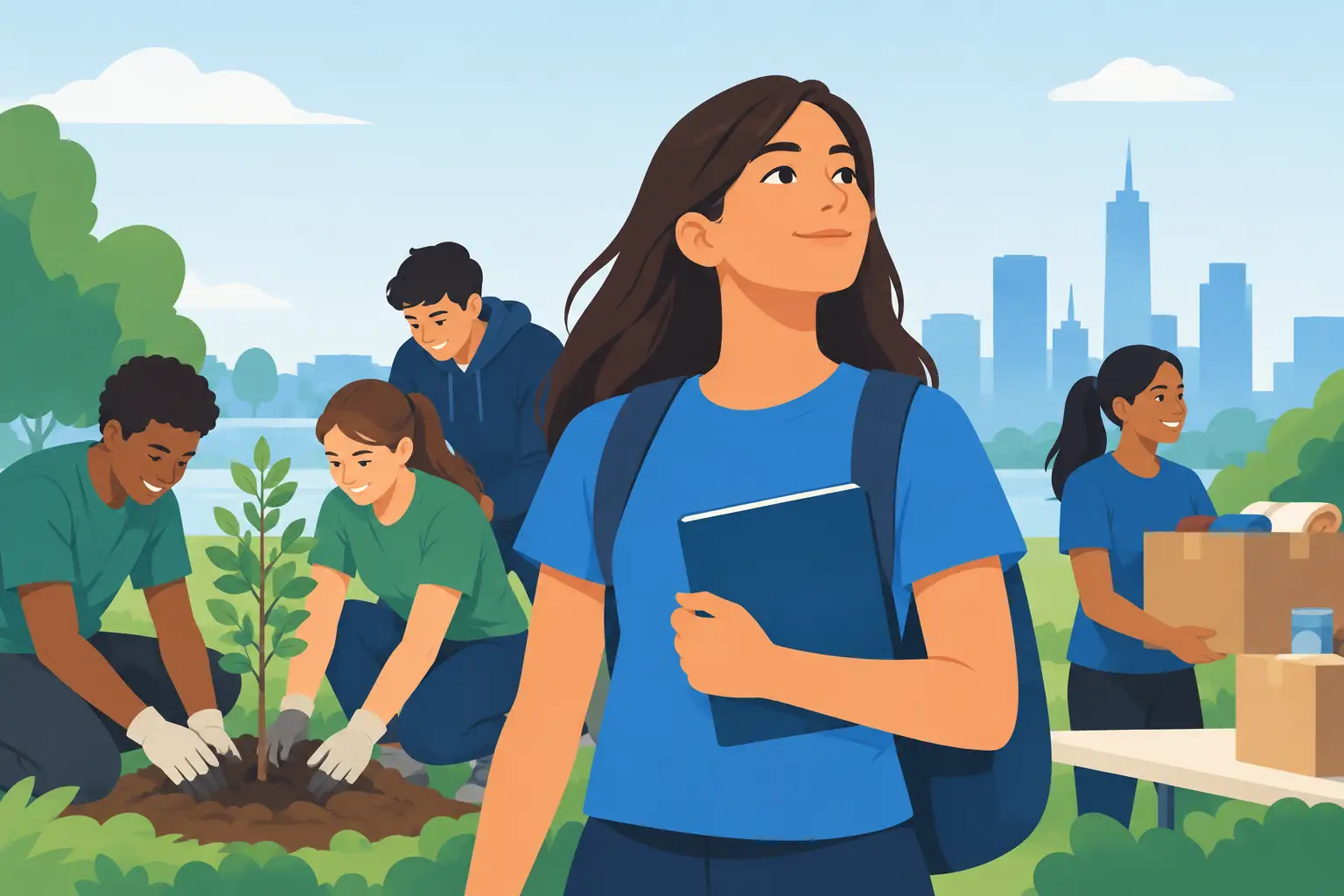
A student who helps organize a neighborhood food drive is doing something valuable. A student who studies food access, speaks with local families, analyzes the results, and helps design a longer-term response is learning how change happens. That is the promise of youth service learning: connecting meaningful service to academic growth, reflection, and real leadership.
Young people do not need to wait until adulthood to contribute to their communities. They need trusted adults, safe spaces, and opportunities that treat their ideas as assets. When service is paired with learning, mentoring, athletics, and career exposure, students can see a direct line between what they practice today and the future they can help build.
What Youth Service Learning Really Means
Youth service learning is more than volunteering. Volunteering can meet an immediate need, and it matters. Service learning goes further by connecting service to a learning goal and giving young people time to reflect on what they experienced, why the issue exists, and what they can do next.
A group of students might support a park cleanup. In a service-learning model, they could also learn about environmental health, map where litter collects, interview residents about park use, calculate waste reduction, and present recommendations to local leaders. The cleanup is still important. But the young people leave with stronger research, communication, problem-solving, and civic leadership skills.
The best projects begin with a real community need, not an adult assumption about what young people should do. Students should have a voice in choosing the issue, shaping the project, and evaluating whether their work made a difference. That ownership turns service from a required activity into a source of pride and purpose.
Why Service Learning Belongs in Youth Development
Classrooms, sports programs, mentoring relationships, and community organizations each offer something essential. Youth service learning creates a bridge among them. It gives students a place to apply what they are learning while building relationships beyond their usual circle.
For a student who is still finding confidence, a project role can be transformative. Maybe they lead a small team, welcome volunteers, create a budget, document results, or speak at a community event. These are not abstract exercises. They are moments where a young person discovers that preparation, follow-through, and their own voice carry weight.
Service learning also builds empathy without asking students to see themselves as saviors. Strong programs help young people understand the systems behind community challenges, listen to people closest to those challenges, and work alongside others with respect. A student serving meals can learn about housing costs, transportation barriers, and the dignity of every neighbor. That fuller understanding leads to more responsible leadership.
For families, educators, coaches, and supporters, the value is practical as well as personal. Young people strengthen skills that carry into school, work, and relationships: collaboration, time management, public speaking, conflict resolution, and initiative. They also gain exposure to adults and careers that may otherwise feel out of reach.
How to Build a Meaningful Youth Service Learning Project
The difference between a memorable project and a one-time event often comes down to preparation. Young people need enough structure to succeed, along with enough room to lead.
Start by listening to the community
Before selecting an activity, ask what matters most to local residents, schools, nonprofit partners, and young people themselves. A school may need support creating a welcoming space for new students. A neighborhood organization may be looking for help with a community garden. A recreation center may need youth leaders for a family wellness event.
Listening prevents well-intended projects from missing the mark. It also introduces students to a core leadership lesson: effective service starts with partnership, not assumptions.
Connect service to a learning goal
Every project should answer a question beyond, “What are we doing?” It should also answer, “What will students learn?” The connection can be academic, personal, or career-focused.
Students planning a community sports clinic can practice event management, health education, budgeting, and teamwork. Students creating care packages for older adults can learn about local history, communication across generations, and the needs of aging communities. A project centered on career clothing can introduce students to professional presentation, entrepreneurship, and workforce readiness.
The learning goal does not need to make the project feel like another class assignment. It simply gives purpose to the experience and helps adults recognize the growth taking place.
Make reflection a regular practice
Reflection is where experience becomes insight. It can happen through a group conversation after practice, a journal entry, a photo story, a presentation, or a discussion with a mentor. The format matters less than the honesty of the questions.
Ask students what surprised them, what was difficult, whose perspective they had not considered, and what they would improve next time. Ask them where they saw their own strengths. These conversations help young people connect service to their values, their goals, and the kind of leader they want to become.
Give students visible responsibility
Adults should guide the process, but young people should hold real roles. They can research an issue, invite partners, manage supplies, lead an activity station, collect feedback, or present project outcomes. When responsibilities are meaningful, students see that leadership is not a title. It is the decision to show up prepared and contribute to a shared goal.
Athletics Can Make Service Learning More Accessible
Athletics already teaches habits that service learning needs: commitment, communication, resilience, and trust. A team learns quickly that individual effort matters, but coordinated effort changes the outcome. That same lesson applies when young people organize a project for their community.
Sports can also provide a natural entry point for students who may not initially see themselves in traditional academic enrichment programs. A coach can connect a lesson about teamwork to a peer mentoring project. Student-athletes can host a youth skills clinic, promote healthy habits, or organize a drive for equipment and school supplies. The court, field, or gym becomes a place where confidence grows into service.
Still, athletics should not be treated as the only pathway. The strongest programs welcome young people with different interests and abilities. Some students may lead through art, technology, writing, organizing, or relationship-building. Every young person deserves a role that recognizes their strengths.
Equity Requires More Than an Invitation
An open invitation is a start, but access requires planning. Students cannot participate consistently if transportation is unreliable, schedules conflict with work or caregiving, supplies cost too much, or the environment feels unfamiliar. Organizations should consider meeting times, transit support, meals, language access, adaptive equipment, and trusted adult supervision from the beginning.
Equity also means avoiding a narrow definition of success. Not every student will become the public speaker or team captain. One may become the person who notices details, keeps a group organized, or makes a new participant feel welcome. Those contributions are leadership, too.
Programs should also compensate young people when the work demands significant time or specialized responsibility, especially when participation could otherwise compete with paid employment. It depends on the scope of the project and available resources, but the question should be asked directly. Community service should expand opportunity, not create another barrier for students with fewer options.
Measuring What Matters
Counting volunteer hours is useful, but it does not tell the whole story. A meaningful evaluation looks at both community benefit and youth growth. Did the project respond to a need identified by partners? Did participants return, recommend it to others, or report that the experience felt respectful and useful?
For young people, measure progress through attendance, completed roles, reflection responses, skill demonstrations, and feedback from mentors. Look for signs of greater confidence, stronger teamwork, improved communication, and clearer career interests. Small changes matter. A student who once avoided group discussion may volunteer to welcome guests at the next event. That is real growth.
Combs Enterprises sees this work as part of a connected pathway: mentorship that builds trust, educational programs that strengthen knowledge, athletics that develop discipline, and career exposure that makes future possibilities visible. Service learning gives students a chance to put those strengths into action for others.
A Shared Responsibility, A Stronger Future
Youth service learning works best when schools, families, coaches, nonprofits, local businesses, and donors each bring something to the table. Educators can connect projects to learning. Community partners can identify priorities. Coaches and mentors can encourage students through challenges. Businesses can offer career insight, materials, and professional role models. Supporters can invest in the transportation, meals, supplies, and staffing that make participation possible.
The goal is not to create perfect projects. It is to create repeated opportunities for young people to practice caring, contributing, and leading. When a community trusts its youth with meaningful responsibility, young people begin to trust their own ability to shape what comes next.
Leave a Reply